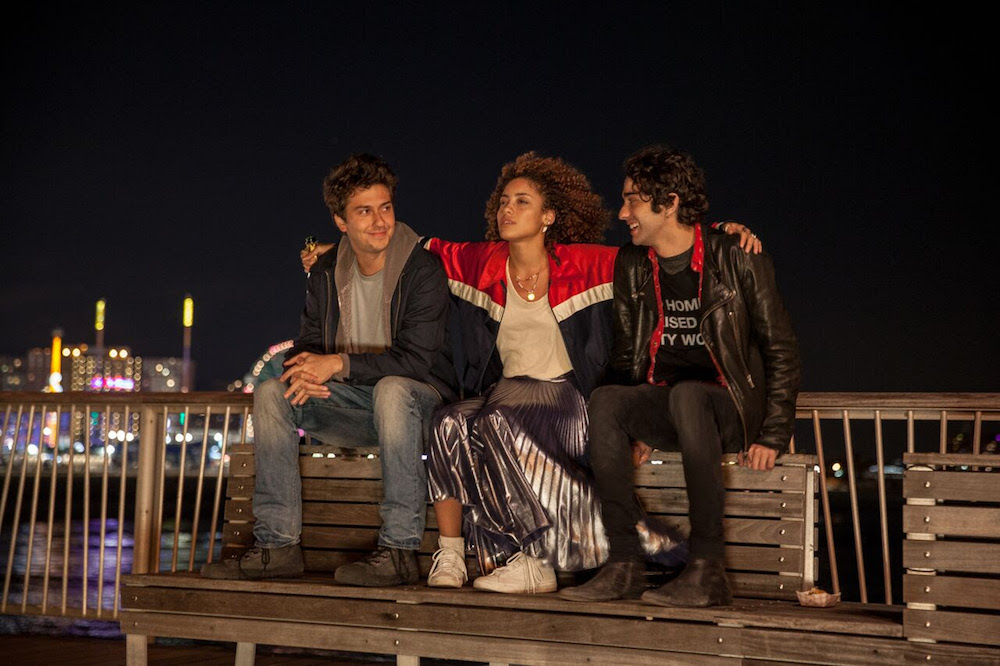
Film Review: ‘Stella’s Last Weekend’
By Amy Nicholson
LOS ANGELES (Variety.com) –
Some parents
pull
strings
to
enroll
their kids in their
al
ma mater. In Hollywood,
celebrity parents have been hammering together
family
showcases for their
progeny —
backyard plays
elevated to the
screen —
and taking their own bows as writer, director, producer, or co-star.
Earlier this summer was “The Year of Spectacular
Men,” Lea Thompson and Howard Deutch’s salute to their daughters Madelyn and Zoey, and the most recent endowment is “Stella’s Last Weekend,” by actress-turned-filmmaker Polly Draper, which stars her sons Nat and Alex Wolff as two brothers dragged across the threshold of maturity over a dramatic weekend with one virginity loss, one fraternal betrayal, and one dying dog, the Stella of the title.
It’s inaccurate
to consider “Stella’s Last Weekend” merely an expensive gift from Draper to her sons. Nat
and Alex are both sought-after young actors
who, since their days together on Nickelodeon’s “The Naked Brothers Band,” have
starr
ed
separately in such
hits
as “
The Fault in Our Stars,” “Paper Towns,” “Hereditary” and “Jumanji.”
They’re in the position of saying no,
not
pleading for
their
mother’s
yes
. The irony is that
Draper’s
own
skills would be better showcased herself if she had cast
a
nyone else. The characters she’s
created, Jack (Nat Wolff) and Oliver (),
are
teen
cads
who yell at old ladies
who dare to
shush
them
at the
ballet.
They’re destructive, callous, petty, and cruel,
the heroes of the film only by default because everyone else has been written to be worse
.
There’s a w
asps’
nest of rich ballerinas the
brothers love to
irr
itate by,
say, chewing a piece of sushi and spitting it in a dancer’s hand.
But such rudeness is justified, the film says, because one of the girls has spread false rumors that she and Jack had a one-night-stand, a lie that makes no sense given the way she glares at him like a worm.
On paper, the script could be a skewering of adolescence
sociopathy
, a millennial “American Psycho,” sans all the murders. With other actors — ones who would have to earn empathy — “Stella’s Last Weekend” could even be good. The Wolffs are fine actors, and, no shocker, convincing siblings. But they’re playing characters, well, only a mother could love, and Draper
beams such
pure
delight at the
pair,
such blinding admiration,
that the movie
trips over its
assumption that the audience will
adore them, too.
Draper even models divine forgiveness
, having cast herself as
their
widowed
onscreen mother
Sally,
who’s
dizzy, charming and delightfully unpredictable,
the type to throw a funeral party for a dog.
In one scene,
she backs down from grounding Oliver and
then
whisper-begs
him
to apologize for calling her a “bitch.”
N
ot even for her sake, but so
that
her live-in boyfriend Ron (Nick Sandow) will think she’s got parenthood under control. The boy
smirks that she’s
pitiful. She
gratefully
kisses him on the cheek.
“Stella’s Last Weekend” plays these scenes for
light
comedy, or at worst, a teasing rap on the knuckles.
But it’s not slapstick
or satire —
the indie pop score is too sincere. Though the brothers take no one’s hurt feelings seriously, the film is devoted to theirs. Their
trouble
starts silently.
Jack, the quieter and older of the two,
spots a gorgeous girl across the
subway platform.
He says nothing — e
ven
the camera doesn’t dare approach
her
— but from a polite
20
feet
away, the audience can tell that
Violet (Paulina Singer)
is
radiant
in her
silver pleated
skirt
and snickers
.
Shortly
after, Jack tells
the extroverted-to-the-point-of-unhinged
Oliver
about the non-incident, that he saw a girl who broke his heart after a magical
encounter at a party.
And then
Violet rings the doorbell and introduces herself as Oliver’s new girlfriend. Cue a love triangle, teenager-
style, where big scenes take place
over text messages or at an
arcade claw machine or the beach, where Violet deals with the awkwardness by stripping to her underwear and plunging into the surf.
It’s a twist that’s way too parochial for a film set in Queens, made doubly implausible by insisting that of course Violet would be interested in a younger high schooler who dry humps everything, including Ron (twice).
Meanwhile, as grown-up emotions and grown-up stakes are off the table, the audience can only half-heartedly interest itself in which brother will be the momentary blip of a bad boyfriend that Violet will forget by the time she turns 30.
Still,
Singer is a luminous, mature presence, at least until the script forces her to
act
otherwise for reasons neither she nor the film can explain
,
and to seem out-of-character even as they’re happening.
E
ven overbearing, embarrassingly combover-ed Ron who we first meet flipping the finger at the dinner table, shifts
personalities to mutate into someone
lovable whenever “
Stella’s Last Weekend”
decides it’s time for a hug.
As
for
Stella
herself
,
the terminally ill dog, she gets the POV shot that sums up the film: an exhausted creature staring at two boys who ignore her life-or-death drama to fist-fight about something dumb.