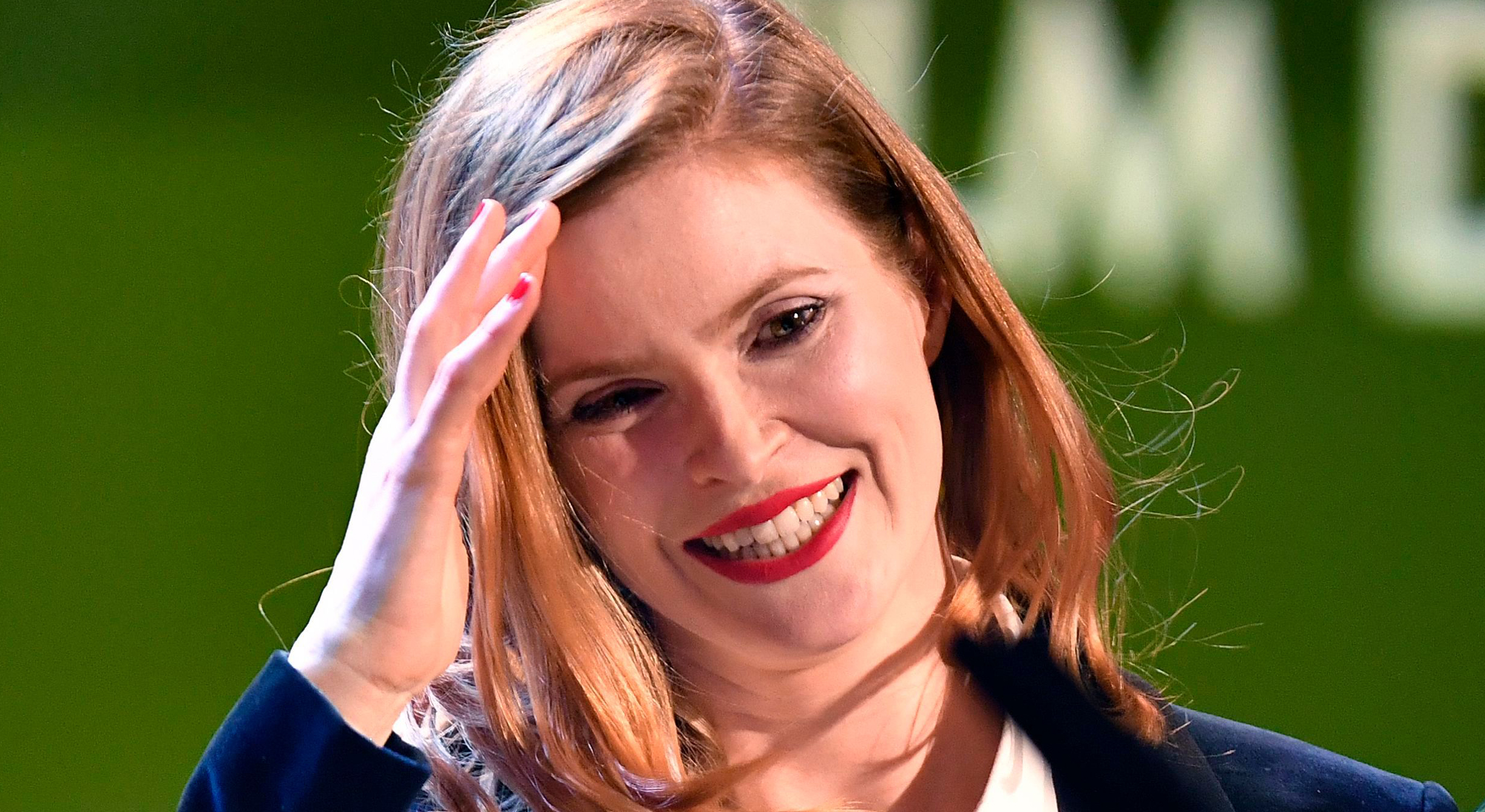
Lisa Brühlmann on ‘Blue My Mind,’ ‘Powerful Films about Women, Rebels, Lovers’
By John Hopewell
LOS ANGELES (Variety.com) – Sold by Be for Films to 15 territories off a San Sebastián world premiere, winner of best film, screenplay and actress (Luna Wedler) at the Swiss Film Awards, “Blue My Mind” has now won actress turned writer-director Lisa Brühlmann a gig directing two episodes of BBC America’s “Killing Eve” Season 2.
It chronicles how 15-year-old Mia changes high school near the end of the summer term, falls in with the cool bad girl crowd, plays truant, shoplifts, has casual sex, drinks, and does drugs as if there is no tomorrow; on which score, at least for Lisa as a human being, she is entirely right. What seems like a classic allegory for horror at pubescent physical change finally develops into a tale of verge-of-maturity female liberation.
After bowing at Austin’s Fantastic Fest and in the San Sebastian’s New Directors, “” went on to win the Golden Eye and Critics’ Choice awards at the Zurich Film Festival in October. It plays Locarno is a Swiss film panorama, as it should do: Arguably, there has been no more commented Swiss first feature in the last 12 months.
Brühlmann talked with Variety about the film, her inspirations and the differences in directing for TV and Film.
“Blue My Mind” begins with a very young girl on a rocky sea shore in a cove, looking out to sea. It finally emerges as a young woman’s acceptance, as this first scene hints at, of her true identity. Could you comment?
On the one hand, I wanted to set the mood and make the audience curious, but also set up the mystic element within the story. Who is this girl? Is she alone on the beach? It’s only later that the viewer can make sense of it and understand that this may have been Mia as a child. We see her longing; we see her connection to the sea. Later on we understand that something was simmering deep inside her; that her true identity was there from the very beginning.
You’ve stated that you wanted to mix a very sensual poetic narrative – Mia’s ocean fantasies – with a harsh reality: her horror and helplessness at her changing body. Was one of the challenges of the film achieving the right balance?
Yes, my d.p. and I had many conversations about this and we were on the same track from the beginning. We filmed a lot with a hand-held camera in order to give the film the necessary realism. It was important to me to strike a balance between the fantasy genre and the realism. I wanted the audience not to be able to sit back. I wanted to give the impression that this story is actually happening now. Surprisingly, all my young actors just went for it; they never even questioned it and understood this very instinctively.
Is it a contradiction that Mía is attracted to the cool set of bad girls at school, when their preoccupation with appearance could be said to be a female teen replication of the bourgeois standards of her parents?
I don’t think that these girls are a replication of the bourgeois standards of Mia’s parents. They try to push the boundaries and Mia feels attracted to them because they seem so free and wild – something Mia genuinely is, but cannot live yet. The more the story evolves, the more we see that those girls are not, in fact, free at all, they are trapped within the ideal of what women should be. They are not connected with their true nature. We get a glimpse here and there: they need drugs to feel free, they need to control their weight and want to be sexy for others rather to feel good in their bodies – something Mia, on the contrary, does in fact experience at the end.
In interviews you never cite any particular film or school of filmmaking as a defining influence. Did “Blue My Mind” come rather out of lifelong interests rather than any film inspiration?
Yes, absolutely. I have always been fascinated by mythological figures. The basic ideas for this story came – very subconsciously – from the gut. In order to not get distracted, I decided not to watch any films for a year before shooting. That was hard, but I think it helped to find a genuine thumbprint.
Have you found radical differences between directing for film and TV?
I’m now directing for the first time for TV, and of course it’s different. There are many more people involved in the creative process and there is a much faster pace to it.
Having made such an impact with your first feature, where would you like to take your filmmaking career now? Are there any particular kinds of films or issues you’d like to explore?
Yes, I want to make emotional and sensual cinema – like the path I established in “Blue My Mind”; films that open up new worlds to the audience. Therefore I like the fantasy genre, but I’m also open to other genres and I’ve always wanted to do a period film. Powerful films about women, rebels or lovers.